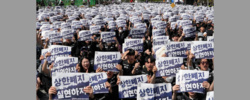
Yes, from the 1960s to the 1980s, the South Korean government actively promoted vasectomies as part of national family planning policies, and in some instances, this included incentives that could be used by men to fulfill or navigate military-related obligations, such as exemptions from certain reserve forces training
.
Here are the details regarding this policy and its context:
Family Planning Policies (1960s–1980s): During a time of rapid population growth, the government pushed for lower birth rates with campaigns like "Let's have only 2 children and raise them well."
Incentives: To encourage compliance, the government offered incentives, including reduced surgery fees and, in some cases, exemptions from military reserve training for men who underwent voluntary sterilization.
Target Population: The policy was targeted at married people with children, including army reservists.
Mass Participation: By the end of 1987, over 1 million men had participated in the government-supported, free-service sterilization program.
Korea Południowa miała problemy z korupcją. Druga megabudowa dla SSP z mega problemami. Tak, owszem, sugeruję, że decyzje byly podjety W nie uczciwym procesie, a rządzący wówczas wzięli łapówki, zeby Ta sama firma dostała realizację tak wielkich inwestycji.
Niesławny, były od lat, wójt z Pcimia, też na pewno nie przypadkiem jest powiązany mniej lub bardziej z tymi decyzjami.
#bekazpisu chociaż oni śmieją się z nas #gospodarka #korupcja (a oni na UA nadają) #koreapoludniowa #polityka #biznes #ciezkiprzemysl #wiadomoscipolska
@cebulaZrosolu urwałeś dla siebie chociaż trochę? 😂🤣