@DyG Ja pierdole, obejrzałem prawie wszystkie odcinki katastrof w przestworzach, a okropnie mnie uderzyło odsłuchanie tego nagrania. Smutne w chuj, w kilka sekund przypierdolić w ziemię.
Przeklejam jeszcze fragment komentarza z reddita:
The ATC audio pretty much confirms they were fighting ice and heavy turbulence. The pilot radioed that they had "manageable clear ice" and asked to climb to escape it, so I think they knew they were in trouble and were actively trying to exit the conditions right before things went sideways.
I think the Learjet's physical design played a huge role here. They are incredibly fast because of their razor-thin, highly swept wings, but that design is completely unforgiving. Even a tiny layer of ice ruins the aerodynamics and sends the stall speed skyrocketing. Plus, with that T-tail configuration, the horizontal stabilizer sits completely out of sight and accumulates ice faster than the wings. The FAA actually has a mandate (AD 99-16-03) specifically warning that tail ice on the Learjet 60 causes a total loss of pitch control, and I think that’s exactly what happened.
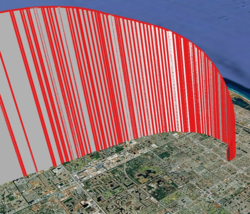
If that tailplane stalled inside the cell, it would lose its ability to hold the nose up, forcing a violent, uncommanded nivedive. To me, that perfectly matches the tracking telemetry. The jet spiked briefly, the autopilot likely kicked off, and they went into a near-vertical plunge peaking at a terrifying 32,000 feet per minute.
The pilot’s final Mayday call said it all: “We are in an overspeed condition... banking 60 degrees.” At those extreme G-forces and forward speeds (over 505 knots), I think the heavy aerodynamic pressure completely locked up the manual controls, making it physically impossible for the pilots to pull out of the dive.