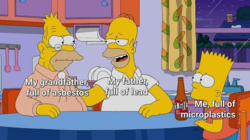
Azbest reklamowany był kiedyś (zwłaszcza w USA) jako "sztuczny śnieg" i był używany do obsypywania choinek, wieńców czy innych świątecznych ozdób.


Najbardziej znany przykład użycia "śniegu" z azbestu pochodzi z planu filmu "Czarnoksiężnik z krainy Oz" z 1939 roku. W jednej ze scen azbestowy śnieg spada na Dorotkę i jej towarzyszy, budząc ich z czaru rzuconego przez Złą Czarownicę z Zachodu.


#ciekawostki

414f69f5-3cd4-4c70-81ab-4d2bb78c715e

Komentarze (7)

Pleban

Co ciekawe kiedyś sprzedawali w USA piżamy z azbestu dla dzieci teraz trochę czasu minęło i zamienili azbest na piżamy kuloodporne:)

Trawienny

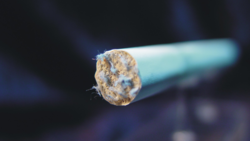
Były jeszcze Kenty z filtrem Micronite z azbestu

c4dc9403-1e03-4b05-9d37-b8f47ccb1ab5
NiebieskiSzpadelNihilizmu

@Pleban "po prostu ludzie żyjący chwilą, bez zmartwień"

Chrabonszcz

@NiebieskiSzpadelNihilizmu ona była jeszcze z tego co pamiętam uzależniona od narkotyków i ją (co najmniej) podrywali dorośli z planu filmowego

SpokoZiomek

@Pleban Jakie pokolenie taka trucizna.

e1a9e94e-67b3-40e2-9636-972698abc705
Vampiress

@Pleban to jeszcze nic, film Zdobywca z 1956 z Johnem Waynem (to ten film co gra w nim Czyngis Chana) kręcono na pustyni, na której odbywały się wcześniej testy bomb atomowych. Większość obsady zachorowała po latach na nowotwory.


Of the 220 crew members, 91 (comprising 41% of the crew) developed cancer by 1980, while 46 (or 21%) died from it. When this was learned, many suspected that filming in Utah and surrounding locations, near nuclear test sites, was to blame. Some victims also believed their habitual tobacco use contributed. The perception of a link between the film's location and subsequent illness remains, not least because many of those involved developed cancer at a younger age than average.

Some filming locations included parts of Utah, such as Snow Canyon, Pine Valley, Leeds, and Harrisburg. Exteriors were shot in the Escalante Desert near St. George, Utah, which is 137 miles (220 km) downwind of the United States government's Nevada National Security Site and received the brunt of nuclear fallout from testing active in this period. In 1953, eleven above-ground nuclear weapons tests occurred at the site as part of Operation Upshot–Knothole. The cast and crew spent many difficult weeks at the site, and producer Howard Hughes later shipped 60 tons of dirt back to Hollywood in order to match the Utah terrain and lend realism to studio reshoots. The filmmakers knew about the nuclear tests, but the federal government had assured residents that the tests posed no hazard to the public health. Over 100 nuclear bombs were detonated in the area from 1951 to 1962.

In 1962, Powell developed lymphoma and died in January 1963. Armendáriz committed suicide in June 1963 after being diagnosed with terminal cancer. Hayward died of brain cancer in 1975. Wayne developed lung cancer in 1964, and eventually died from stomach cancer in 1979. Several of Wayne's and Hayward's relatives visiting the set also had cancer scares. Wayne's son Michael developed skin cancer and Patrick had a benign tumor removed from his breast. Hayward's son, Tim Barker, had a benign tumor removed from his mouth. Moorehead was a nonsmoker, teetotaler and health fanatic, yet died of cancer in April 1974. Her mother Mary maintained that it was working on The Conqueror which ultimately killed Agnes.

Hoyt died of lung cancer in 1991. Van Cleef died from a heart attack in 1989, but his secondary cause of death was listed as throat cancer. Some point to other factors such as the wide use of tobacco for the cancer deaths. Wayne's heavy-smoking habit was blamed for his cancer by Wayne and his wife Pilar Pallete. In a 2001 interview with Larry King, Powell's widow June Allyson stated that the cause of death was lung cancer due to his chain smoking. Hayward's cancer began as a lung tumor identified in March 1972 that later metastasized.

Reportedly, Hughes felt guilty about his decisions regarding production, particularly over the decision to film at a hazardous site. He bought every print for $12 million and kept it out of circulation for many years until Universal Pictures purchased the film from his estate in 1979. The Conqueror, along with Ice Station Zebra, are said to be among the films Hughes watched endlessly during his last years.

Dr. Robert Pendleton, then a professor of biology at the University of Utah, is reported to have stated in 1980, "With these numbers, this case could qualify as an epidemic. The connection between fallout radiation and cancer in individual cases has been practically impossible to prove conclusively. But in a group this size you'd expect only 30-some cancers to develop. With 91 cancer cases, I think the tie-in to their exposure on the set of The Conqueror would hold up in a court of law." Several cast and crew members, as well as relatives of those who died, considered suing the government for negligence, claiming it knew more about the hazards in the area than it let on.

Since the primary cast and crew numbered about 220, and a considerable number of cancer cases would be expected, controversy exists as to whether the actual results are attributable to radiation at the nearby nuclear weapons test site.This statistic does not include the Native American Paiute extras in the film.


Swoją drogą, to niezły dowód na to, że pod pewnymi względami USA niewiele się różni (i różniło) od rassiji.

Zaloguj się aby komentować