1. Ogłaszane są sankcje z odległym terminem wejścia w życie.
2. Podmioty do tej pory kupujące surowiec z Rosji na bieżąco robią duże zapasy przed wejściem sankcji w życie
3. Duży zastrzyk gotówki dla Moskwy
4. Na realny wpływ sankcji trzeba czekać przez kolejny rok.
5. Pojawiają się głosy, że sankcje nie działają, gdy realnie ich widoczny wpływ został odciągnięty w czasie przez panikę na rynku i chomikowanie zapasów.
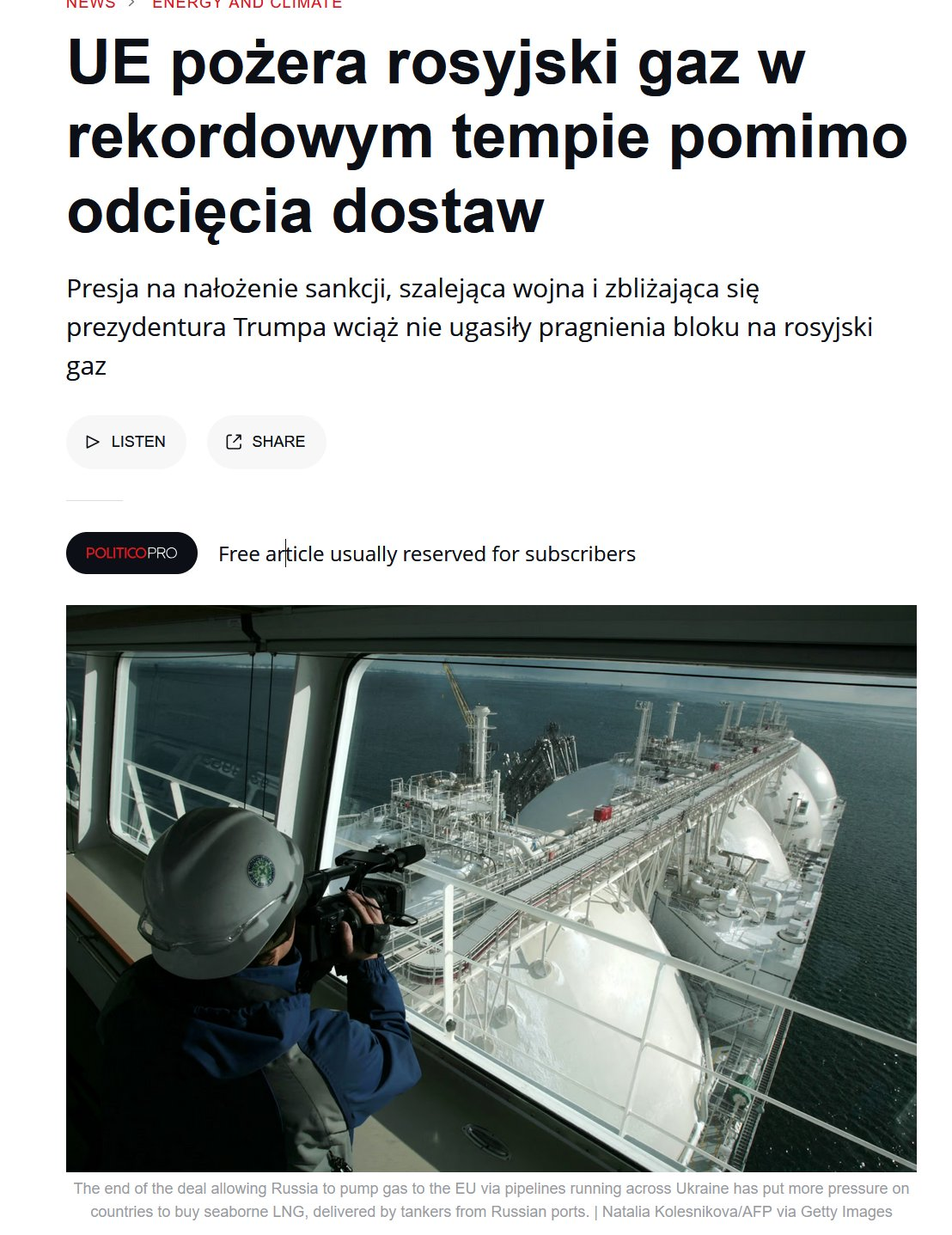
"Europa w pierwszych tygodniach 2025 r. sprowadza rekordowe ilości rosyjskiego gazu skroplonego (LNG), mimo zakończenia 1 stycznia kluczowej umowy tranzytowej przez Ukrainę. W ciągu pierwszych 15 dni roku unijne kraje przywiozły 837,3 tys. ton LNG z Rosji – to więcej niż w analogicznym okresie ubiegłego roku.
Zakończenie umowy z Ukrainą zmusiło niektóre państwa (np. Słowację i Węgry) do kupowania droższego LNG zamiast tańszego gazu z rurociągów. Premier Słowacji Robert Fico grozi nawet wstrzymaniem dostaw prądu do Ukrainy, jeśli Kijów nie przywróci tranzytu gazu.
Pomimo prób uniezależnienia się od rosyjskiej energii – w tym planowanego przez Komisję Europejską „mapa drogowa” ograniczania importu rosyjskiego gazu – dostawy wciąż rosną, głównie z powodu długoterminowych kontraktów z rosyjskiego kompleksu LNG na półwyspie Jamalskim.
Dziesięć państw UE wzywa do wprowadzenia sankcji na rosyjski LNG, argumentując, że przychody z gazu finansują działania wojenne Moskwy w Ukrainie. Jednocześnie rośnie presja, by Unia kupowała więcej gazu z USA, co popierają zarówno przewodnicząca KE Ursula von der Leyen, jak i nowo zaprzysiężony prezydent Donald Trump, który zapowiada zwiększenie amerykańskiego wydobycia i eksportu LNG."
@Aryo niestety - Niemieckie uzależnienie od ruskiego gazu i próby tego ukrycia, zarówno polityczne, jak i logistyczne to jest tragedia. Siedzę w biznesie i pusty śmiech ludzi brał jak Niemcy z dumą ogłaszali niezależność pokazując statystykę zerowego importu z rosji, gdzie jednocześnie ciągnęli na potęgę cysternami z Zeebrugge ruskie LNG wyprane w papierach xD
Gwarankurwatuje, że gdyby Niemcy zamiast NS1&2 zrobili porty LNG i infrastruktura po stronie dostawców (skraplarnie, porty wysyłkowe) i transportu była gotowa na zaspokojenie całości dostaw, to mielibyśmy już dawno pełne embargo. Zaryzykuję nawet stwierdzenie, że wojna w ogóle mogła się nie rozpocząć, bo ominięcie Ukrainy i Polski z dostawami do Europy Zachodniej (głównie Niemiec) było jednym z istotnych czynników które prawdopodobnie przechyliły wskazówkę że warto zaryzykować inwazję.
> The new project, Nord Stream 2, will enable Russia to provide natural gas to Germany directly instead of going through Ukraine. This has stark consequences for Ukraine: What little leverage Ukraine holds over Russia comes largely from the fact that Russia has to export most of its natural gas through Ukraine in order to reach Europe. If Russia can bypass Ukraine, the pipeline would make that leverage obsolete.
> Nord Stream 2 is a tool Russia is using to support its continued aggression against Ukraine. Russia seeks to prevent it from integrating more closely with Europe and the United States. Nord Stream 2 would enable Russia to bypass Ukraine for gas transit to Europe, which would deprive Ukraine of substantial transit revenues and increase its vulnerability to Russian aggression.
> The resolution goes on to appeal for the above in the name of European values and solidarity with Ukraine and for care for stability and security in Europe as well as to increase EU resistance to Russian pressure.
> A joint statement by the foreign ministers of both countries, Dmytro Kuleba and Zbigniew Rau, said the decision to stop opposing the construction of Nord Stream 2 "has created [a] political, military and energy threat for Ukraine and central Europe, while increasing Russia's potential to destabilize the security situation in Europe."
> Thankfully, given TurkStream’s limited capacity, Moscow has not been able to entirely diminish Ukrainian gas transit, but the completion of the much larger Nord Stream 2 would
enable the Kremlin to make good on its threat. Such an eventuality would eliminate gas transit payments to Kyiv, and hence provide Moscow with an economic cudgel to use in its ongoing campaign of aggression toward Ukraine. The hard security implication of the move is more ominous: if Moscow is able to eliminate its own dependence on existing Ukrainian pipeline infrastructure – some of which sits physically adjacent to the current line-of-contact in Donbas – there would be one less strategic deterrent to an extension of Russian aggression in eastern Ukraine.
> Mecklenburg-Vorpommern is the landfall site for the line, Nord Stream 2, which bypasses the former Soviet Republic. The United States long argued the line would weaken Ukraine; Germany and Russia insisted the project was purely commercial.